Ring Roller Mill
How It Works
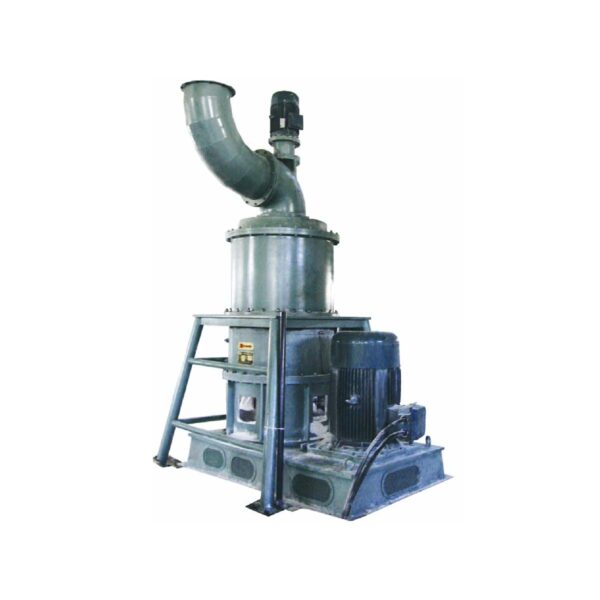
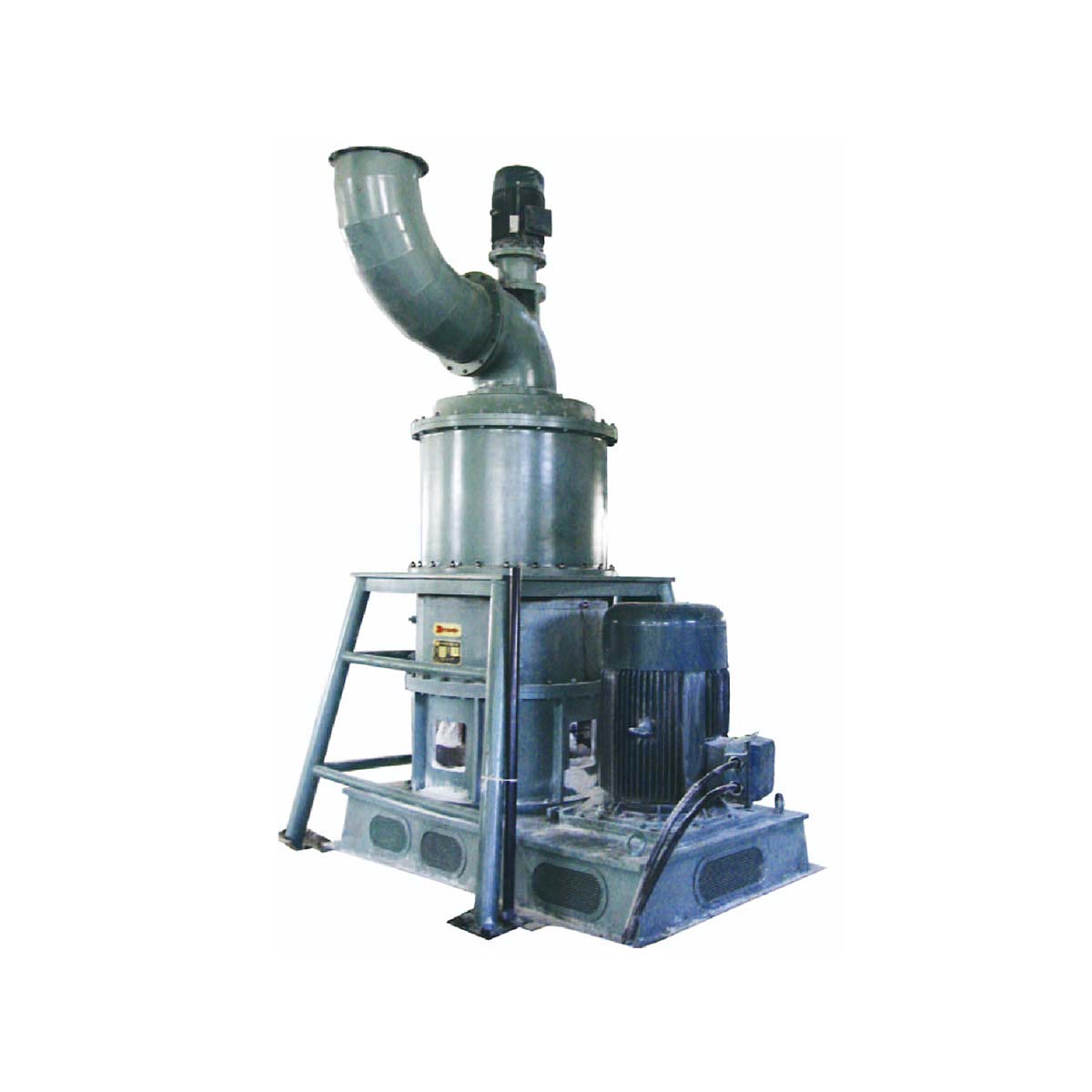
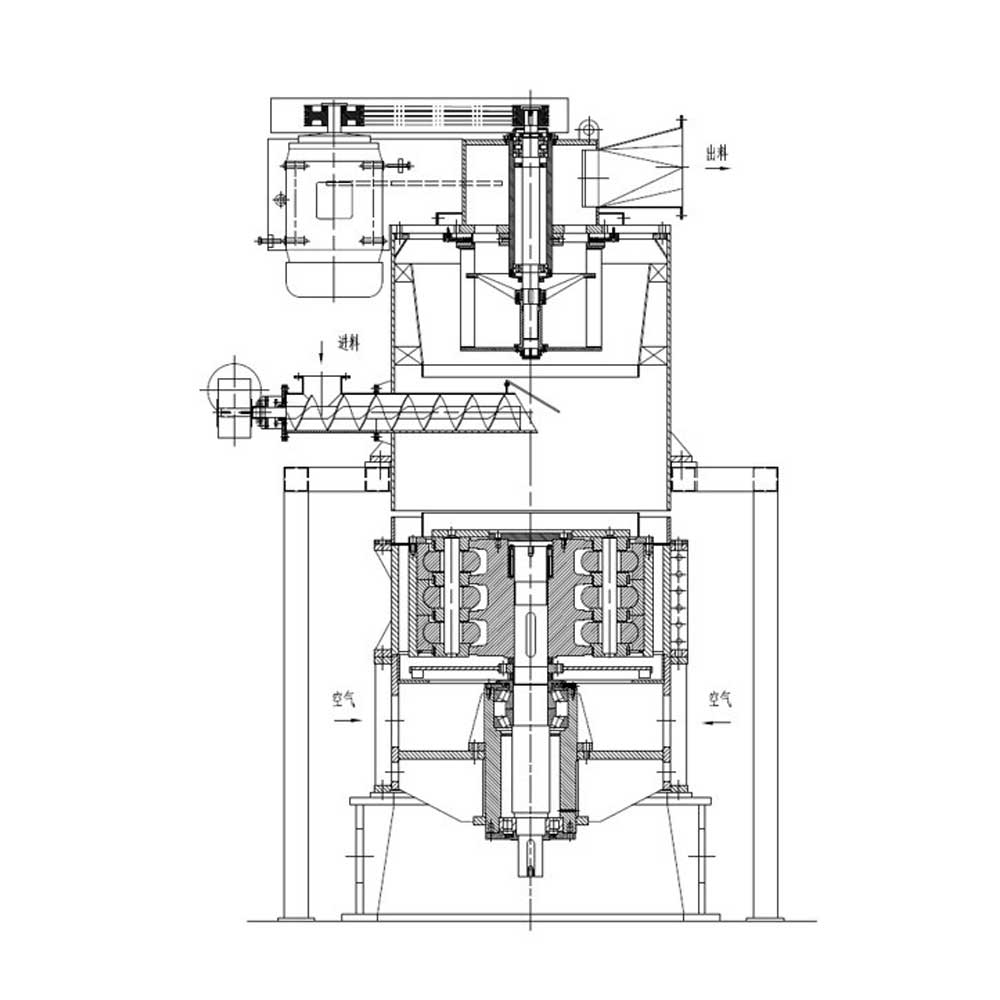
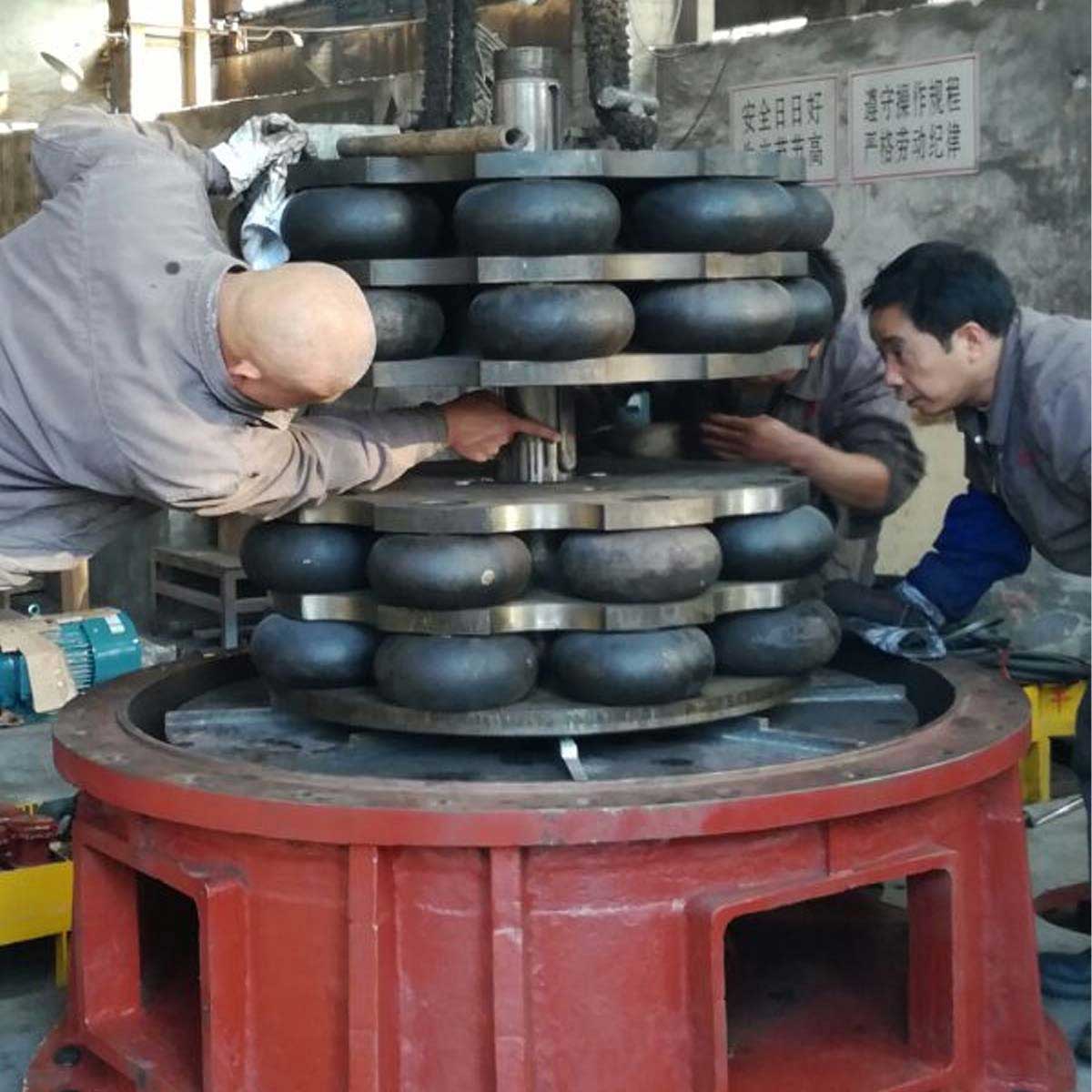
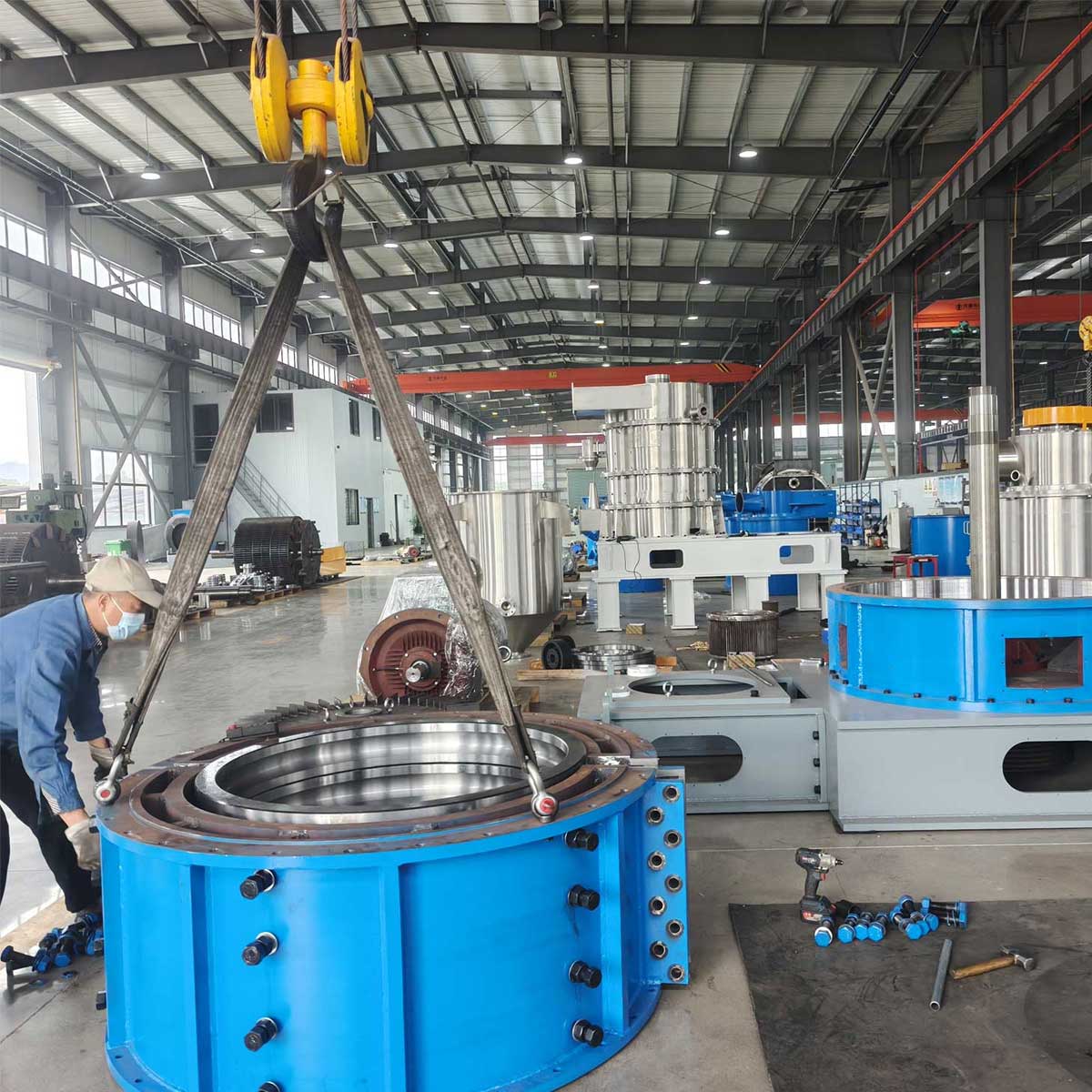
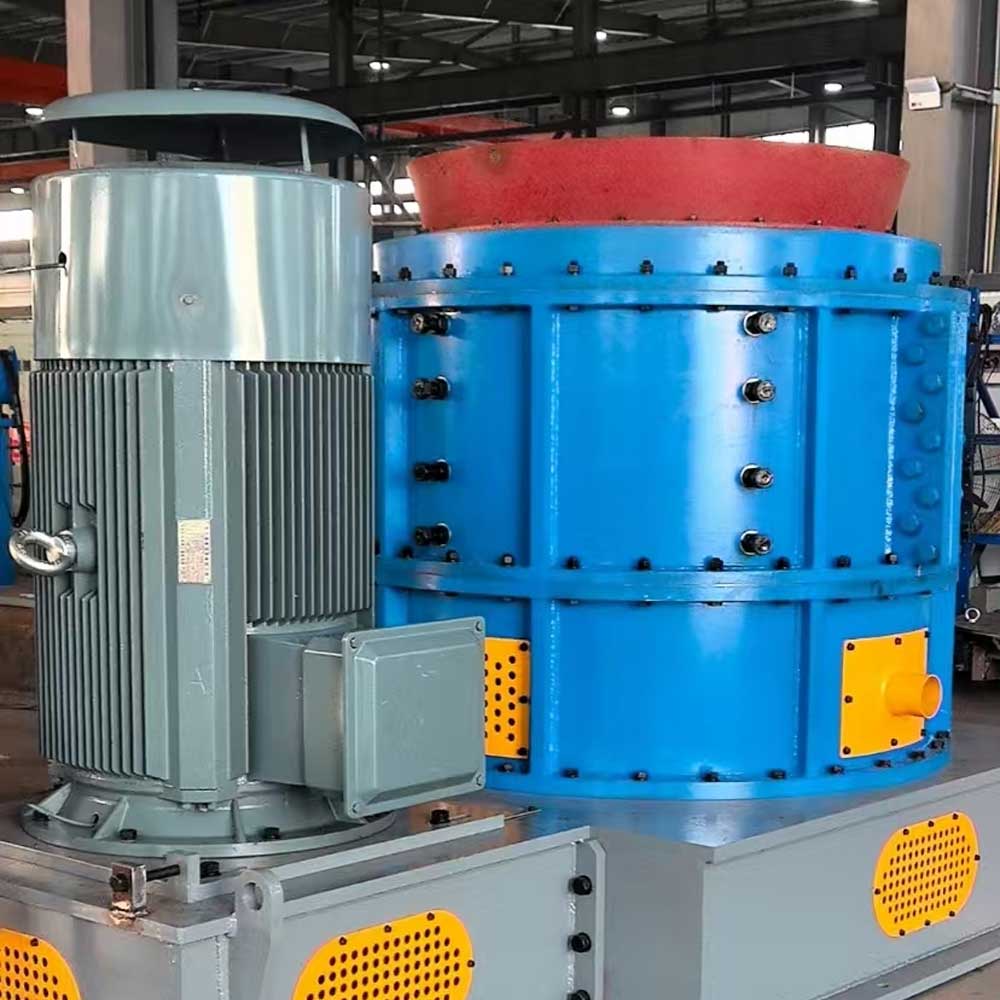
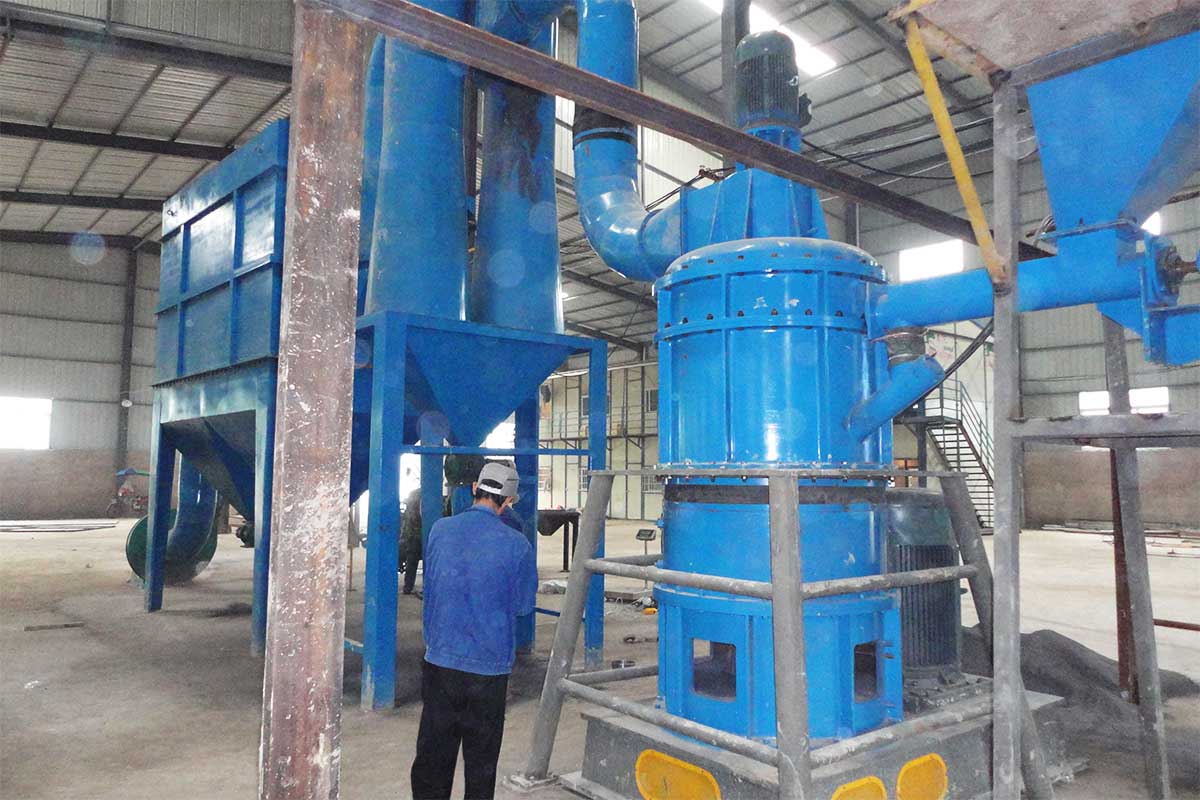
Designed specifically for aluminum hydroxide (ATH) ultrafine powder processing, the ring roller mill operates on a centrifugal rolling and extrusion grinding mechanism. Pre-dried ATH feed material is uniformly delivered into the grinding chamber through a variable-frequency screw conveyor. Inside the chamber, multiple grinding rollers rotate at high speed and press outward against the stationary grinding ring under centrifugal force, progressively crushing and pulverizing the ATH particles through continuous rolling compression. The ground powder is then lifted by upward negative-pressure airflow to the built-in dynamic turbo classifier at the top of the mill, where fine ATH particles meeting the target size pass through the classifier wheel and are pneumatically conveyed to the downstream collection system.
Oversized coarse particles are rejected by centrifugal force, fall back into the grinding zone, and undergo re-grinding, forming a continuous closed-circuit grinding loop. To address the heat-sensitive nature of ATH, the grinding chamber is fitted with an external water-cooling jacket that dissipates friction heat during milling, strictly maintaining internal temperatures below 90°C to prevent thermal dehydration of aluminum hydroxide and preserve its flame retardant properties throughout the production process.
Technical Parameters
| Model Series: JRLM | 880 | 980 |
|---|---|---|
| Main power (kW) | 75~90 | 132 |
| Rotor speed (r/min) | 22 | 30 |
| Particle size (μm) | 5~45 | 5~45 |
| Air volume(max) (m³/min) | 7500 | 9000 |
| Output (kg/h) | 600~2500 | 800~4500 |
| Power (kW) | 155 | 225 |
| Total weight (t) | 11 | 18 |
