Introduction
Aluminium Trihydroxide (ATH) is the leading halogen-free flame retardant mineral filler worldwide. Tighter fire safety and low-smoke regulations push fast growth across cable, construction composite, coating, electrical plastic and adhesive markets. Different end applications require strictly controlled particle size, narrow particle distribution, low moisture and good dispersion. Many ATH producers only focus on D97 fineness, ignoring heat control and surface treatment. Improper milling will cause dehydration, powder agglomeration, poor compatibility with resin, and rejected bulk orders. This article breaks down the high-growth ATH end markets, their powder specifications, and matched grinding, classification and surface modification equipment for your ATH powder production line.
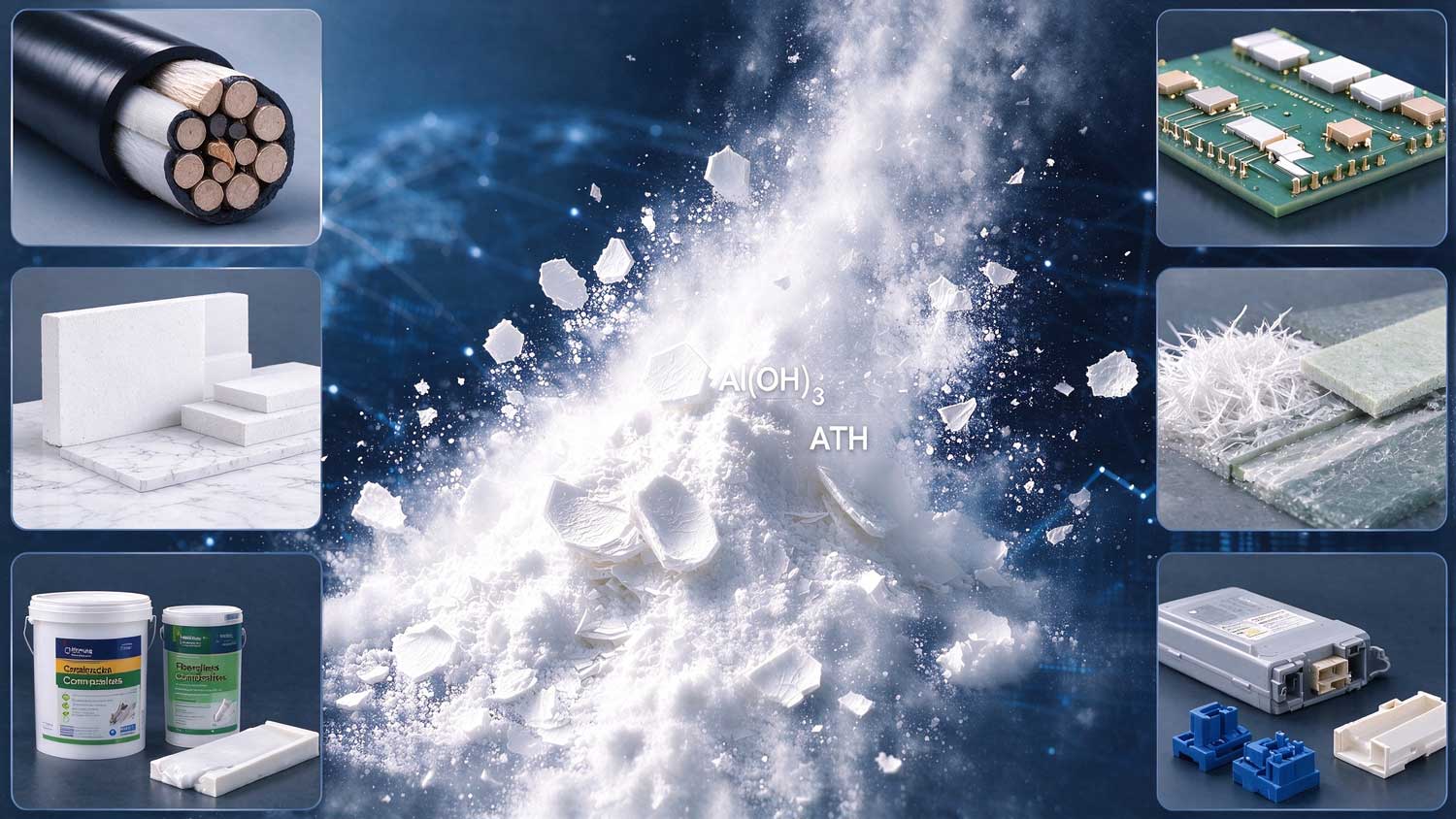
1. Low Smoke Zero Halogen (LSZH) Cable & Wire Compounds
LSZH standards are widely adopted in rail transit, building wiring, data center and new energy power projects. These materials release little toxic smoke and corrosive gas during fire, making this the largest consumption market for fine ATH powder.
ATH for LSZH cable needs medium fineness, narrow particle distribution, low moisture and stable volume resistivity. Surface modification is required for uniform blending with polyolefin resin. Overheating in grinding triggers ATH dehydration and weakens flame retardancy; agglomeration brings speckles and unstable extrusion flow.
Ring Roller Mill fits mass continuous production thanks to low heat generation and stable output. After grinding and classification, the Three‑Roller Vortex ATH Surface Activation Modification Mill carries out dry coating to improve resin compatibility.
2. Construction Composites & Artificial Marble
Green building and fire codes drive demand for fire-resistant panels, prefabricated boards and artificial marble. ATH provides lasting flame retardancy while keeping good whiteness, surface smoothness and filling capacity.
This application requires controllable medium fineness, low impurities and good flowability. Purchasers prioritize batch consistency. Quality fluctuations cause color difference, surface pits and uneven hardness. High-tonnage orders demand long-running stable production.
Ring Roller Mill and Air Classifier Mill are suitable. They deliver stable particle size and high throughput for composite and artificial marble grade ATH.
3. Coatings, Adhesives & Sealants
Fire-resistant coatings, anti-corrosion adhesives and weatherproof sealants are fast-growing segments. These formulations have strict limits on oil absorption, fineness and dispersion. ATH acts as both flame retardant filler and functional additive.
Ultra-fine ATH with narrow distribution is required. Unmodified ATH has high oil absorption, raising resin cost and making viscosity hard to control. Oversized grains cause pinholes and scratches; agglomerated powder easily settles in liquid systems.
Fluidized Bed Opposed Jet Mill or Spiral Jet Mill produces ultra-fine ATH for high-grade coatings. Surface modification by Three‑Roller Vortex ATH Surface Activation Modification Mill reduces oil absorption and prevents sedimentation.
4. Electrical & Electronic Plastic Components
New energy devices, home appliances and electrical enclosures follow strict UL94 V‑0 flame retardant standards. ATH serves as halogen-free filler for plastic housings, circuit accessories and insulation parts.
Electronic-grade ATH must be ultra-fine, high-purity and low in heavy metals. Metal contamination or overheating during milling damages insulation and brings leakage risk. Minor particle inconsistency affects injection molding and mechanical strength.
Fluidized Bed Opposed Jet Mill and Spiral Jet Mill make high-purity ultra-fine ATH with low metal contamination. Operators must control airflow temperature and feed speed carefully to avoid ATH dehydration.
5. How to Match Milling & Modification Equipment by ATH Process Stage
ATH is heat-sensitive and easy to agglomerate. The whole production flow follows pre-treatment → grinding & classification → surface modification. Pick machines according to your raw ore condition and target end market.
Pre-treatment Stage
- Turbo Flash Disintegration & Drying Machine: For damp, agglomerated ATH raw material. It breaks powder lumps and removes excess moisture before grinding, avoids agglomeration and unstable classification, protects ATH from local overheating.
Grinding & Integrated Grinding-Classification Stage
- Ring Roller Mill: High capacity, low heat generation, ideal for mass production of medium-fine ATH powder for cable compounds and artificial marble, stable PSD and low dehydration risk.
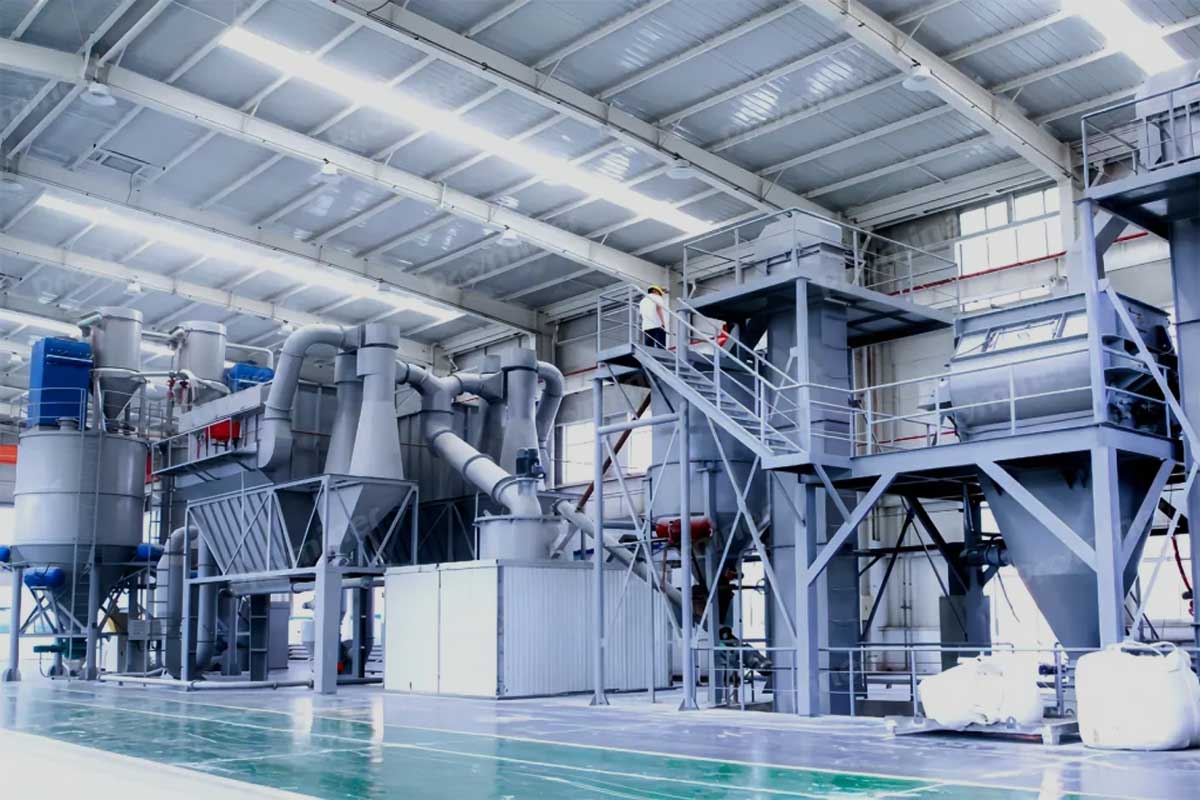
- Air Classifier Mill: Compact all-in-one grinding and classification unit, suitable for small to medium ATH plants, good for mid-range fineness grades for coating and plastic filler.
- Fluidized Bed Opposed Jet Mill: Produces ultra-fine, high-purity ATH powder for high-grade coating and electronic plastic; strictly control running temperature to avoid ATH dehydration.
- Spiral Jet Mill: Delivers ultra-fine ATH for premium flame retardant formulations; best for customers who need very fine particle size and accept higher energy cost.
Independent Classification Stage
- Air Classifier: Standalone precision classification unit, works with your existing grinding host to cut particle size, remove oversize grains and lock narrow particle distribution for consistent flame retardant performance.
Surface Modification Stage
- Three‑Roller Vortex ATH Surface Activation Modification Mill: Dry surface coating equipment for finished ATH powder. It improves powder dispersion, reduces oil absorption and greatly boosts compatibility with polyolefin resin for LSZH cable and plastic compounds.
6. FAQ
- Q: Why is temperature control so important for ATH grinding?
A: Aluminium Trihydroxide (ATH) is heat-sensitive. Excess heat during milling triggers dehydration, which destroys its flame retardant function and makes your powder unqualified for LSZH cable grades. - Q: Which mill is best for mass production of ATH for low smoke halogen-free cables?
A: Ring Roller Mill is the preferred option. It runs with low heat build-up, stable throughput and consistent particle size distribution, matching the large-volume demand of cable compound factories. - Q: Does ATH powder for coating need surface activation modification?
A: Yes. Modified ATH disperses better in resin, reduces sedimentation and lowers oil absorption, preventing pinholes and surface defects in fire-resistant coatings. - Q: Can jet mill produce qualified ATH for electronic flame retardant plastics?
A: Fluidized Bed Opposed Jet Mill and Spiral Jet Mill can produce ultra-fine high-purity ATH, but you must control air temperature and feeding speed to avoid dehydration. - Q: What problem will agglomerated ATH raw material bring to milling?
A: Clumpy ATH causes uneven feeding, fluctuating particle size and poor classification result. Turbo Flash Disintegration & Drying Machine solves lump and moisture issues at the front of the line. - Q: What is the difference between Ring Roller Mill and jet mill for ATH?
A: Ring Roller Mill offers higher output and lower heat for standard fine ATH; jet mill achieves finer particle sizes but consumes more energy and requires stricter temperature control. - Q: Can one ATH production line make powder for both cable and coating markets?
A: Yes. You can adjust classification parameters and choose whether to run the Three‑Roller Vortex ATH Surface Activation Modification Mill for modified or unmodified ATH grades.
7. Conclusion
Every end market sets different standards for fine Aluminium Trihydroxide (ATH). The booming LSZH cable, construction composite and high-grade coating markets require not only target fineness, but stable temperature control, narrow particle distribution and reliable surface modification.
Contact our team to get a custom ATH grinding, classification and surface modification process plan for your powder plant.